
Vermiculite fireproofing cement – also called cementitious spray fireproofing, sprayed vermiculite or fire spray – is the most common way to fire-protect structural steel in Singapore factories, warehouses and commercial buildings. It is economical, quick to apply over large areas and, when specified and applied correctly, very effective. This guide covers what it is, how it works, how thickness is decided, how to check the work, and how to keep it in good condition.
In this guide
What vermiculite fireproofing cement is
It is a lightweight plaster made from a cement or gypsum-based binder mixed with expanded vermiculite – a natural mineral that has been heated so it puffs up into light, heat-resistant granules. The mix is sprayed (or occasionally trowelled) directly onto steel beams, columns and roof members, where it sets into a rough, fibrous-looking coating.

How it protects steel
Steel does not burn, but it loses strength as it heats up. In a fire, unprotected steel can heat quickly enough to lose much of its load-carrying capacity in a short time. Vermiculite cement works as an insulating blanket: it slows the transfer of heat into the steel so the structure keeps its strength for the specified fire resistance period, giving time for evacuation and firefighting.
Where it is used
- Steel portal frames, roof trusses and purlins in factories and warehouses
- Steel beams and columns hidden above ceilings in offices, shops and malls
- New mezzanines, platforms and extensions added during A&A works
- Car park and plant-room steelwork
- External steel structures and industrial plant (with external grade material)
Internal and external grade
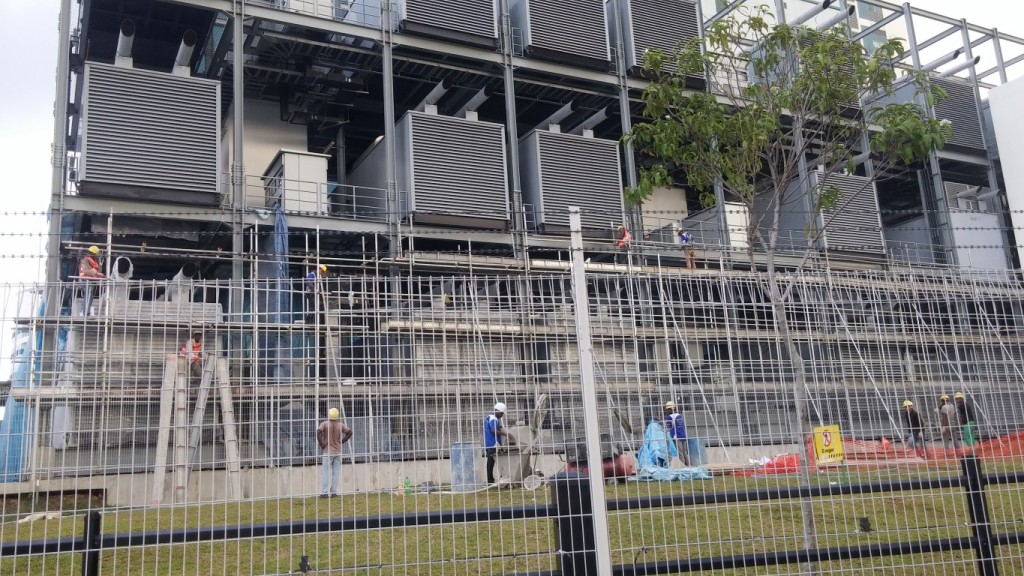
Internal grade vermiculite is designed for dry, protected areas. External grade systems are formulated to resist moisture and weather for steel exposed outdoors or in damp areas. Using internal grade material outside is a common cause of softening, cracking and fall-off within a few years. If in doubt – open-sided structures, canopies, areas near wash-down or high humidity – ask about external grade.
Thickness and fire ratings
Vermiculite can achieve fire resistance periods from 1 hour up to 4 hours. The thickness required depends on three things:
- The fire rating specified by your QP or consultant.
- The steel section – expressed by manufacturers as the section factor (Hp/A). Light, slender members heat faster and need more material than heavy ones.
- The product’s tested thickness tables – each certified product has its own.
That is why one building can have several different thicknesses.
How it is applied
- Survey – list the steel members, ratings, access and whether areas are internal or external.
- Preparation – remove loose rust, mill scale, oil and dust; apply primer or bonding agent where the system requires it.
- Masking and protection – cover walls, floors, equipment, cables and finished surfaces from overspray.
- Spraying in layers – building up to the required thickness, with depth-gauge checks as work proceeds.
- Finishing – trimming around services and edges; optional sealer or finish coat where specified.
- Records – thickness readings, photos and product documents for handover.
How to check the work
- Thickness – spot-check with a depth gauge on flanges, webs and column faces; edges and corners are the usual thin spots.
- Coverage – no bare steel at connections, brackets, cleats or behind services.
- Adhesion – no hollow-sounding, cracked or delaminating areas.
- Grade – external grade where steel is exposed.
- Documents – certified product information and the applicator’s records.
Vermiculite vs boards vs intumescent paint
| Vermiculite cement | Fire-rated boards | Intumescent paint | |
|---|---|---|---|
| Finish | Rough, textured | Smooth, paintable | Smooth, painted |
| Best for | Large areas of hidden steel | Visible columns and beams | Exposed architectural steel |
| Cost | Usually lowest for large areas | Medium | Usually highest |
| Process | Wet spray, needs masking | Dry, no overspray | Several coats with drying time |
| Durability | Can be knocked off by impact | Robust when boxed | Resists light knocks |
See fire-rated board encasement and vermiculite vs intumescent paint.
Damage, repair and maintenance
Most vermiculite problems appear years after installation:
- chipped off around brackets when cable trays, ducts and pipes are installed,
- softened and fallen away where roofs or pipes leak,
- knocked off by forklifts, racking or equipment,
- “repaired” with ordinary cement or plaster, which gives no fire rating.
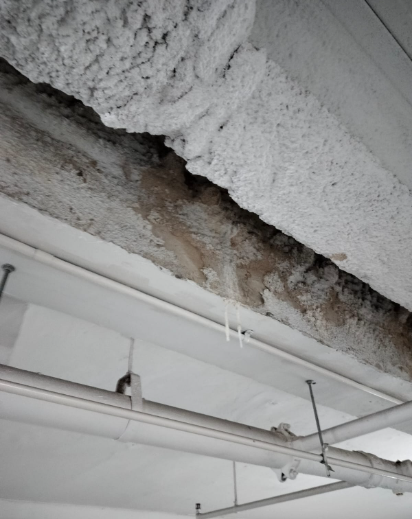
Proper repair means cutting back to sound material, cleaning the steel, and reinstating with a compatible product to the original thickness. Read: repairing damaged vermiculite on metal columns and our repair service.
Older buildings: a word of caution
Some very old sprayed coatings in older buildings may contain asbestos. If your building is old and you are unsure what the existing coating is, have it tested before it is hacked, drilled or removed, and follow the required procedures if asbestos is found.
Frequently asked questions
Is vermiculite fireproofing the same as asbestos spray?
No. Modern vermiculite fireproofing cement does not contain asbestos. Only some very old coatings in older buildings may, which is why testing is advised before disturbing old material.
Can vermiculite be applied over painted or rusty steel?
Loose rust, scale and contamination must be removed first. Whether it can go over existing paint depends on the product and primer compatibility – we check this during the survey.
How long does vermiculite fireproofing last?
In dry, protected areas it can last for the life of the building if it is not damaged. Most failures come from impact, water and later works, which is why periodic checks are worthwhile.
Can you spray around existing services?
Yes, but it takes more masking and care. Where possible, spraying before services are installed gives the best coverage.
Do you do small repairs as well as large areas?
Yes – from a single damaged column to a full warehouse.
Need vermiculite fireproofing or a repair?
WhatsApp us photos or drawings, the site location and the fire rating required, and we will advise the right system and arrange a site check.
or email sales@fireproofingsys.com
Leave a Reply
You must be logged in to post a comment.