
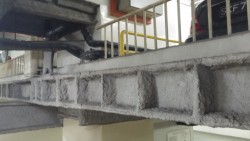
One of the first questions we get on any steel fireproofing job is: how thick does the vermiculite need to be? There is no single number. The right thickness is worked out member by member, and getting it wrong is one of the most common reasons spray fireproofing is rejected at inspection.
Three things decide the thickness
1. The fire resistance period
Your Qualified Person (QP) or consultant specifies how long the steel must keep its strength in a fire – typically somewhere between 1 hour and 4 hours depending on the building and the element. A longer rating needs more insulation, so more material.
2. The steel section
Light, thin steel sections heat up much faster than heavy, thick ones, because they have a lot of surface exposed to the fire compared with the amount of steel inside. Manufacturers express this as the section factor (often written Hp/A). A higher section factor means the member heats up faster and needs a thicker coat for the same rating. That is why a slender roof purlin and a heavy column on the same job can need very different thicknesses.
3. The product’s tested data
Every certified spray fireproofing product has been fire-tested, and the manufacturer publishes thickness tables based on those tests. The applicator reads off the thickness for each combination of rating and section factor. Using one product’s table for a different product is not acceptable.
How thickness is checked on site
- The applicator sprays in layers and checks with a depth gauge as the work proceeds.
- Readings are taken at several points on each member – flanges and web on beams, all faces on columns.
- Thin areas are built up before the material sets.
- Readings and photos are recorded for handover.
What goes wrong when it is too thin
- The steel can reach a critical temperature earlier than the specified time in a fire.
- Inspection or a QP check finds readings below the required thickness – and the area has to be built up again, often after ceilings and services are in place.
- Edges and corners of flanges are commonly under-sprayed if not checked.
Too thick is not “extra safe” either
Excess thickness wastes material and adds weight, and very thick single coats can crack or delaminate. Material should be applied in proper layers to the specified thickness.
Quick checklist before you start
- Confirm the fire rating for each steel element with your QP.
- List the steel sections (or provide the structural drawings).
- Confirm whether the steel is internal or exposed to weather – external areas need an external grade product.
- Agree how thickness readings and photos will be recorded.
Read more about vermiculite spray fireproofing, or see the comparison with intumescent paint.
Need the thickness worked out for your steel?
WhatsApp us photos, the site location and the fire rating required. WhatsApp 9072 0570 or email sales@fireproofingsys.com.
Leave a Reply
You must be logged in to post a comment.